

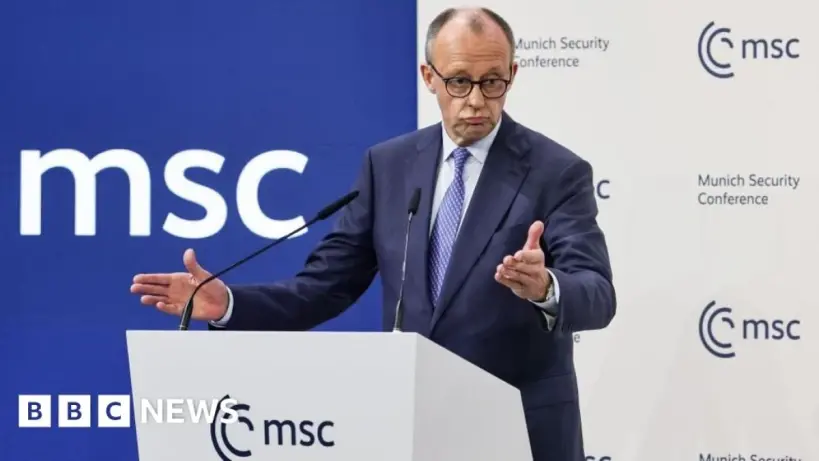
Opening the world-renowned Security Conference in Munich, German Chancellor Friedrich Merz issued a chilling declaration that the established rules-based global order has effectively collapsed.
The Chancellor emphasized with grave concern that Europe’s hard-won freedoms can no longer be taken for granted in an increasingly volatile and unpredictable international political landscape.
Merz urged global leaders and European citizens alike to prepare for incredibly difficult choices as the continent navigates this harsh and dangerous new geopolitical climate.
His opening remarks set a somber tone for the summit, highlighting the urgent need for a radical reassessment of how democratic nations protect their sovereignty and values.
The speech is being viewed by analysts as a historic pivot in German foreign policy, signaling a move toward a much more assertive and prepared stance.
Transatlantic Trust Shattered: Merz Recalls Greenland Tensions as Marco Rubio Signals the Dawn of a 'New Geopolitical Era'
Chancellor Merz pointed to deepening and dangerous fractures between Europe and the United States, suggesting that the foundation of transatlantic trust has been severely shaken.
He specifically referenced past diplomatic tensions, including the highly controversial proposal to purchase Greenland, as evidence of the erratic shifts that have damaged mutual cooperation.
In response, U.S. Secretary of State Marco Rubio, preparing to address the summit, acknowledged that the world has entered a complex and challenging 'new era'.
Rubio highlighted the unprecedented scale of change that current global leaders must navigate, emphasizing that the old ways of diplomacy may no longer be sufficient today.
The tension between the two historical allies remains a central theme of the conference, with many wondering if the traditional NATO bond can ever truly recover.
Summit of 50 Leaders: Nuclear Deterrents and NATO’s Future Dominate the High-Stakes Agenda in Munich
With approximately 50 world leaders gathered in Munich, the summit’s agenda is dominated by urgent discussions regarding European defense strategies and the survival of NATO.
Ongoing global conflicts, most notably the devastating Russia-Ukraine war, remain at the forefront of the dialogue as leaders seek a definitive path toward a lasting peace.
Significant attention is also being directed toward rising tensions with China and the potential, yet highly controversial, revival of the Iran-US nuclear agreement in the future.
In a move that could redefine European security, Merz hinted at confidential and high-level talks with French President Emmanuel Macron regarding a unified European nuclear deterrent.
As the UK and France are the continent's sole nuclear powers, a shift away from the US nuclear umbrella would represent a massive change in defense policy.
Europe Reassessed: Denmark Slams Annexation Threats as Nations Scramble to Define Their Role in a Changing World
Denmark’s Prime Minister Mette Frederiksen used the summit platform to discuss the lingering impact of US threats to annex Greenland, calling it a strategic complexity.
This dialogue reflects a broader and growing need for European nations to reconsider their strategic positions as they face pressure from both allies and adversaries alike.
Frederiksen’s participation underscores the fact that even smaller European nations are now forced to play a more active role in defending their territorial and political integrity.
The call for reviving alliances remains strong, yet Merz and other leaders are increasingly advocating for a "stronger Europe" that can stand on its own feet.
The summit continues to serve as a critical barometer for the future of global stability, as leaders struggle to piece together a new framework for international peace.


Comments
Log in to write a comment